
Many industrial facilities assume that if stormwater looks clear, it must be clean. Unfortunately, metals do not always behave that way. Unlike sediment or visible oil sheens, dissolved metals can move through a site unnoticed while still contributing to benchmark exceedances and compliance challenges under industrial stormwater permits. Facilities with strong housekeeping practices and sediment controls may still struggle with elevated Zinc, Copper, Lead, Aluminum, or Iron in stormwater discharges. In many cases, the problem is not the absence of BMPs, it is the use of BMPs that are not designed to target dissolved pollutants. As industrial stormwater programs continue emphasizing pollutant reductions and water quality improvements, understanding how metals behave in runoff is becoming increasingly important across multiple industries.
Common Sources of Metals in Industrial Stormwater
- Brake dust and vehicle traffic
- Galvanized materials
- Outdoor equipment storage
- Scrap metal handling
- Exposed metal surfaces
- Corrosion and weathering
- Industrial residues and particulate buildup
- Heavy equipment wear and maintenance activities
Metals are present in stormwater at many industrial sites, often as a byproduct of everyday operations and exposure to outdoor conditions.
Common sources include:
Facilities such as transportation yards, metal fabricators, recycling facilities, manufacturing plants, ports, and equipment storage areas are especially vulnerable to metals-related stormwater issues. One of the challenges with metals is that they are not always visible. A discharge may appear clean while still containing dissolved pollutants capable of triggering benchmark exceedances during sampling events.
Dissolved Metals vs. Particulate Metals
Understanding the difference between dissolved and particulate metals is critical when selecting effective BMPs. Particulate-bound metals are attached to sediment or suspended solids. These pollutants can often be reduced through traditional stormwater controls such as wattles, sediment barriers, sweepers, and filtration BMPs designed to capture solids before they leave the site.
Dissolved metals behave differently. These pollutants remain suspended at the molecular level and can pass directly through many standard filtration systems. In some cases, facilities install sediment controls expecting metals reductions, only to find benchmark levels remain elevated because dissolved pollutants are bypassing the treatment system entirely. Water chemistry also plays a major role. Factors such as pH, contact time, flow rate, and pollutant concentration can significantly impact metals mobility and treatment effectiveness.
This is one reason metals compliance can become frustrating for facilities. A BMP may appear effective during visual inspections while still underperforming during analytical sampling.
Why Some BMPs Fail Against Metals
Not all stormwater BMPs are designed to address dissolved pollutants. Many traditional controls are highly effective for reducing sediment, debris, and hydrocarbons, but metals often require more specialized treatment approaches.
Common failure points include:
Using Sediment BMPs Alone
Sediment controls are important, but they primarily target particulate pollutants. Dissolved metals can pass through these systems with minimal reduction.
Poor Contact Time
Treatment media requires adequate interaction time with stormwater to effectively capture dissolved pollutants. High flow velocities and channelized runoff can significantly reduce performance.
Media Overloading
Once filtration media becomes saturated with pollutants or blinded by sediment accumulation, treatment efficiency declines rapidly.
Inadequate Maintenance
Even high-performing BMP systems can fail when inspection and maintenance are inconsistent. Accumulated sediment, damaged containment, or bypass flow paths can reduce effectiveness during storm events.
Incorrect Media Selection
BMPs designed for hydrocarbon removal are not automatically effective for metals treatment. Different pollutants require different treatment strategies and media technologies.
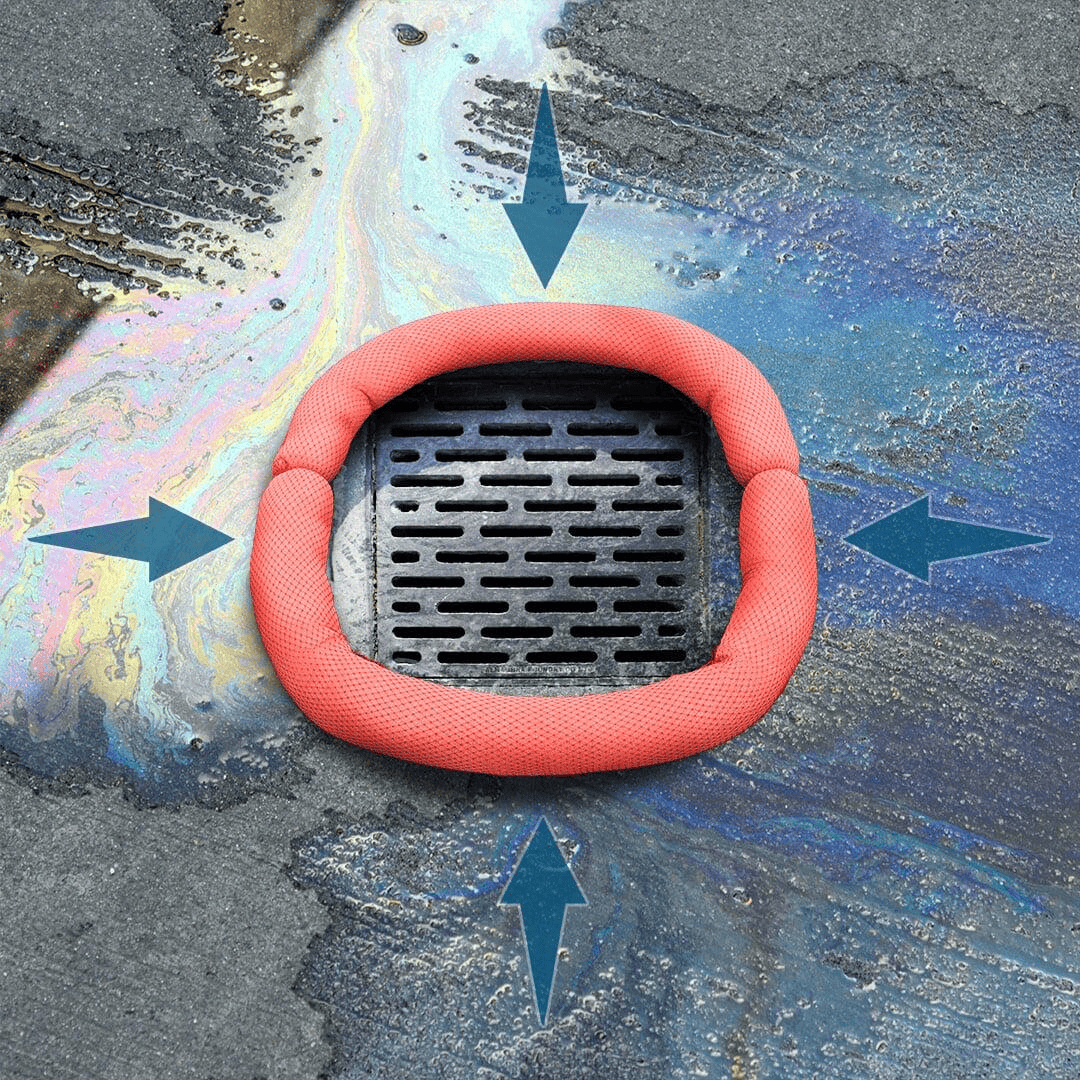
BMP Strategies for Metals Removal
Successful metals control programs often rely on layered treatment approaches rather than a single BMP solution. Depending on site conditions and pollutant sources, facilities may implement combinations of:
- Metal-specific filtration media
- Activated treatment blends
- Drain insert systems
- Filtration wattles and socks
- Flow-through treatment systems
- Flocculants for fine particulate binding
- Source control and exposure reduction measures
Pretreatment is often one of the most overlooked components of metals management. Reducing sediment and gross solids upstream can improve the lifespan and effectiveness of downstream treatment media by preventing premature clogging or blinding.
For many facilities, the most effective approach involves a treatment train strategy where multiple BMPs work together to target different pollutant types and flow conditions.
A typical example may include:
- Sediment controls to slow flow and capture solids
- Pretreatment BMPs to reduce suspended particulate loading
- Metal-targeting filtration media for dissolved pollutant removal
- Carbon polishing or secondary treatment for hydrocarbons and residual contaminants
This layered approach typically produces more consistent performance than relying on a single BMP to solve every stormwater challenge.
Building a More Effective Metals Compliance Strategy
Metals exceedances are not always a sign that a facility is failing to manage stormwater. In many cases, they indicate a mismatch between pollutant conditions and BMP selection.
Effective metals management starts with understanding:
- Where pollutants originate
- Whether metals are dissolved or particulate-bound
- How runoff moves across the site
- Which BMPs are designed for the pollutants present
- How maintenance impacts long-term performance
Facilities that take a targeted, site-specific approach to stormwater treatment are often better positioned to improve benchmark performance and reduce recurring compliance issues over time.
Stormwater treatment is rarely one-size-fits-all, especially when dissolved pollutants are involved. The most successful programs combine source control, operational practices, preventive maintenance, and properly selected treatment BMPs designed around real-world site conditions.
At Frog Environmental, we help facilities evaluate stormwater challenges, identify BMP gaps, and implement practical treatment strategies tailored to industrial operations and permit requirements.